Herramientas y Carpetas para el uso de las Autoridades Nacionales Competentes
-
Necesidades legítimas anuales (ALR)
En su resolución 49/3, titulada "Fortalecimiento de los sistemas de fiscalizacion de precursores utilizados en la fabricación de drogas sintéticas", la Comisión de Estupefacientes (en marzo de 2006) entre otros, pidió a los Estados Miembros que proporcionen a la Junta Internacional de Fiscalización de Estupefacientes, con las previsiones anuales de sus necesidades legítimas de 3,4-metilenedioxifenil-2-propanona, seudoefedrina, efedrina y 1-fenil-2-propanona y, en la medida de lo posible, las necesidades previstas de importación de preparados con esas sustancias que pueden utilizarse o extraerse por medio de fácil aplicación.Sírvase consultar los vínculos a continuación para tener acceso a la información relativa a los ALR, y temas asociados: -
Lista Roja
La Lista Roja es la lista de Precursores y sustancias químicas utilizados frecuentemente en la fabricación ilícita de estupefacientes y sustancias sicotrópicas sometidos a fiscalización internacional. El vínculo anterior lo conducirá a la Lista Roja. A continuación, le proporcionamos además un vínculo que le permitirá acceder al Diccionario Multilingüe de Precursores y Sustancias químicas utilizados frecuentemente en la fabricación ilícita de estupefacientes y sustancias sicotrópicas sometidos a fiscalización internacional.
-
Formulario D
Los usuarios pueden descargar una copia del Formulario D utilizando el enlace anterior. Los gobiernos están obligados a informar anualmente sobre las sustancias utilizadas frecuentemente en la fabricación ilícita de estupefacientes y sustancias psicotrópicas y deben completar el Formulario D y presentarlo preferiblemente antes del 30 de abril, y no despúes del 30 de junio de cada año. Se urge a los Gobiernos a proporcionar información pormenorizada en todas las secciones del formulario, especialmente sobre toda información mandatoria relacionada con las incautaciones, los métodos de desviación, remesas detenidas y fabricación ilícita. -
Gobiernos que han solicitado notificaciones previas a la exportación de conformidad con el artículo 12, párrafo 10 a) de la Convención de 1988
Se recuerda a los gobiernos de los países y territorios exportadores su obligación de enviar notificaciones previas a la exportación a los gobiernos que las hayan solicitado de conformidad con lo dispuesto en el artículo 12, párrafo 10 a), de la Convención de las Naciones Unidas contra el Tráfico Ilícito de Estupefacientes y Sustancias Sicotrópicas de 1988. -
Proyectos CNA
Dos iniciativas internacionales de la Junta, el Proyecto Prisma y el Proyecto Cohesión, sirven como plataformas de comunicaciones para la vigilancia del comercio lícito que puede ser utilizado en la fabricacion ilícita de estimulantes de tipo anfetamínico, de heroína y de cocaína, respectivamente, y para el lanzamiento de operaciones de tiempo limitado. Las autoridades centrales competentes involucradas en estos proyectos pueden acceder a ésta página siguiendo el vínculo anterior que lo llevará a la pantalla de ingreso protegida con contraseña. -
PEN Online
Los Gobiernos partícipes de la Convención de 1988 están obligados a proveer notificaciones previas a la exportación a los Gobiernos de los países y territorios importadores que lo han requerido oficialmente. El sistema de Notificaciones Previas a la Exportación en línea (PEN Online) ha sido desarrollado por la JIFE con el fin de facilitar este intercambio y es una herramienta fundamental para prevenir la desviación de precursores del comercio internacional. El vínculo anterior conducirá a los usuarios del sistema a la página de inicio del mismo. -
PICS
El Sistema de Comunicación de Incidentes de Precursores (PICS) es la herramienta en línea de la JIFE que mejora la comunicación a tiempo real del intercambio de información de incidentes en precursores entre autoridades nacionales. El vínculo anterior conducirá a los usuarios registrados a la página de inicio del sistema PICS. Se invita a las agencias de gobierno que estén interesadas en recibir acceso al sistema PICS, a notificar su interés a la siguiente dirección de correo-e: incb.pics[at]un.org -
Kit de Herramientas de la ONU sobre Drogas Sintéticas
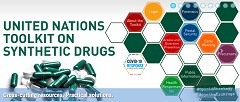 La Plataforma de herramientas de las Naciones Unidas sobre drogas sintéticas provee una gama de recursos electrónicos y herramientas de aplicación práctica de las organizaciones pertinentes del sistema de las Naciones Unidas, a saber, la JIFE, la UNODC y la OMS. El módulo de precursores desarrollado por la JIFE se puede acceder a través del enlace anterior. El módulo solo está disponible en inglés y ruso.
¿Tiene alguna pregunta?
Correo electrónico:
incb.precursors[at]un.org